
The Suppressed Dangers of Mammograms
Leave a Comment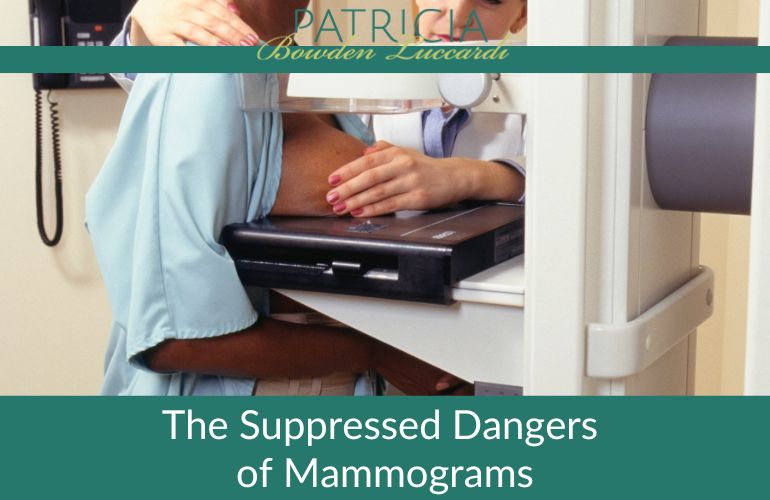
Every October, we’re surrounded by pink ribbons and slogans urging women to “catch it early” and “save a life.”
But decades since these campaigns began, there’s still no cure – only more treatments.
I prefer to call it Breast Health Awareness Month because true awareness isn’t about fear or early detection of disease. It’s about prevention, education, and empowering women to make informed choices about the health of their breasts.
In any case, there is a growing body of research, which now suggests that x-ray mammography is doing more harm than good for the millions of women who subject themselves to these screenings.
Yet, most women still don’t know what mammograms can do to breast tissue, and they’re deprived of informed consent when it comes to knowing the true risks and benefits.
The good news is this information is readily available (if you know where to find it) and there are non-invasive, radiation-free alternatives available.
So, if you’re concerned about the dangers of mammograms, and you want to learn more about the risks they pose, and why thermography offers a safer alternative, then this article is for you.
The Hidden Dangers of Mammograms
Mammography has long been promoted as the gold standard for breast screening, but growing evidence now questions its safety and effectiveness.
The low-energy X-rays used in mammograms are a form of ionizing radiation – the same type known to cause cell mutations that can lead to cancer.
Studies published in respected journals, including The British Medical Journal, indicate that the radiation used in breast screening may be four to six times more carcinogenic than previously thought.
When mammograms begin at age 40 and are repeated annually, the cumulative radiation exposure can increase the risk of breast cancer by as much as 600% over a woman’s lifetime.
When Prevention Becomes the Problem
While mammography is sold as prevention, evidence suggests it may actually promote the very disease it claims to prevent.
Research shows that X-ray radiation can damage DNA and even alter healthy breast tissue, transforming low-risk or benign cells into aggressive, stem-like cancer cells capable of spreading.
In other words, what’s presented as an act of protection could be quietly planting the seeds of future harm.
The Epidemic of Overdiagnosis
Radiation isn’t the only problem, as overdiagnosis has become a silent epidemic.
Screening often detects small, non-life-threatening abnormalities such as ductal carcinoma in situ (DCIS), which is something many women might live with their entire lives without ever developing symptoms.
However, these findings often lead to unnecessary mastectomies, chemotherapy, radiation, and lifelong medication use.
According to a systematic review of incidence trends related to mammography, for every 2,000 women screened over 10 years, one life may be saved.
But at the same time, 10 women will receive unnecessary treatment, and hundreds will experience severe emotional trauma from false positives.
As far as I’m concerned, that’s a pretty heavy price to pay for something we refer to as routine screening.
The Informed Consent Problem
Despite these risks, major health organizations continue to lower the recommended age for mammograms – from 50 down to 40 years old – exposing millions more women to radiation.
Yet few are told the full truth.
This lack of transparency violates the basic principle of informed consent.
Women are encouraged, and even pressured, to undergo mammography without understanding its potential consequences or the alternatives available to them.
In any case, true health empowerment can only begin when we’re given all the facts, not just the ones that support a particular medical agenda.
A Safer, Smarter Alternative: Thermography
Fortunately, safer options exist.
Thermography, for example, is a radiation-free, non-invasive imaging technology that can detect early physiological changes in breast tissue – often years before a mammogram can identify a structural change.
Unlike mammography, thermography doesn’t compress the breast, emit radiation, or risk tissue damage. It simply measures temperature and blood-flow patterns, offering a window into your body’s natural responses.
For instance, thermography can help identify inflammation, hormonal imbalances, lymph congestion, and early vascular changes – all before disease takes hold.
Your Breast Health, Your Choice
You deserve options, you deserve informed consent, and you deserve care that empowers you instead of frightening you.
That’s why I ensure every woman I work with receives education, personalized support, and access to radiation-free thermography, which is a safe and effective tool for proactive breast health.
Why expose yourself to radiation when you can choose a gentle, preventative, and empowering approach instead?
Ready to go radiation-free?
Book a thermography appointment today and start taking control of your breast health.