
Tag Archive: Breast Ultrasound

  1. Why Women Should Have Access to Breast Ultrasound

    Leave a Comment
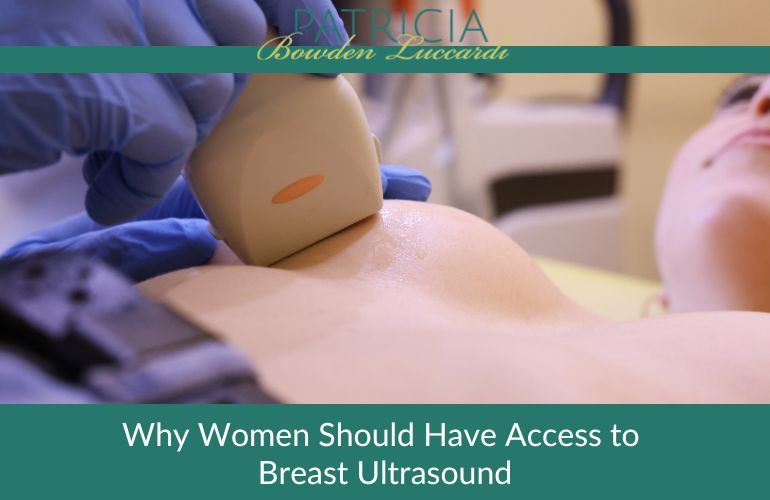
    Why Women Should Have Access to Breast Ultrasound

    In recent years, I’ve noticed most of the patients who come to me for breast thermography want to avoid mammograms.

    This has been amazing to see, as more women are saying no to the radiation and compression of mammograms and the harm that comes with them.

    What’s more, they’re looking for safer alternatives to prevent breast health issues, like ultrasound.

    Thermography is great in this respect, as it works in tandem with an environmentally safe ultrasound.

    But women are being denied access to just an ultrasound without first having a mammogram, and in many cases, insurance companies will refuse to pay for only an ultrasound.

    With that in mind, let’s dive a bit deeper into the difference between mammograms and breast ultrasound, and explore why women should have access to this innovative form of screening.

    Mammograms vs. Breast Ultrasound

    Mammography has been the gold standard for decades, but the research continues to show that the harms of this procedure outweigh its benefits.

    Here are a few common concerns related to mammograms:

    • Over-diagnosis and over-treatment
    • False positives and unnecessary procedures
    • Radiation exposure and painful compression
    • Limited accuracy for women with dense breasts
    • Tumors often found years after they start developing

    On the other hand, breast ultrasound offers a non-invasive, radiation-free alternative to mammograms, which can:

    • Be more comfortable than other breast imaging techniques
    • Help determine if breast lumps are fluid-filled or solid
    • Offer greater accuracy for women with dense breasts
    • Provide additional information to guide biopsies
    • Reduce exposure to radiation

    Exposing the Truth About Mammograms

    I highly recommend the documentary, bOObs: The War on Women’s Breasts, which exposes the reality of mammograms.

    Even the trailer, which you’ll find below, offers some eye-opening truths that might surprise you.

    This film explores the ongoing debate around mammography as a breast cancer screening tool and discusses the fact that over the past three decades, its widespread use has been linked to the over-diagnosis of an estimated 1.3 million American women, leading to unnecessary interventions for cancers that may never have progressed.

    Medical experts interviewed in the film discussed the potential harms tied to mammography, including radiation-induced cancers, trauma-related metastases, and avoidable treatments like chemotherapy, radiation, and mastectomies.

    It also examines how industry interests and conflicts in medical research have limited broader access to alternative, radiation-free screening methods like thermography and ultrasound.

    This documentary offers a couple of much-needed reminders for all women.

    The first one is that there are non-invasive ultrasounds available today that can help detect cancer early – without causing harm.

    Moreover, it also reminds us that you do have the option to have an ultrasound without a mammogram, even though you may have been told otherwise.

    And here are a few places where you can go about doing that:

    QT Imaging

    The goal of QT Imaging is to provide highly accurate, 100% safe and painless breast imaging that can be used to identify cancer early to minimize invasiveness, increase the effectiveness of treatment, and eliminate unnecessary interventions – like additional imaging and biopsies – for women with benign breast conditions, most notably cysts.

    SonoCiné

    SonoCiné provides what’s known as Automated Whole Breast Ultrasound (AWBUS), which offers a consistent, repeatable scan of the whole breast including the axilla (underarm/lymph nodes).

    HerScan

    HerScan is a mobile breast ultrasound screening company that provides much-needed access to breast ultrasound testing with state-of-the-art technology used by highly experienced and certified sonographers and board-certified radiologists.

    The HerScan program makes it convenient and affordable for women to be scanned, adding invaluable protection to their annual health routines.


    Offering Breast, Upper Body, and Full Body Exams

    Contact me to book your thermography appointment today.

  2. A Game-Changing Ultrasound for Dense Breasts & Implants

    Leave a Comment

    Ultrasound-for-Dense-Breasts-Implants

    During my many years as a thermographer, I’ve learned that a great majority of women who seek out thermography have dense breasts. Many have had years of mammograms and/or biopsies with benign results, and all of them want to avoid radiation and compression.

    In fact, more than 40% of women have dense breast tissue.  If a woman relies on anatomical screenings of mammography and ultrasound, her chances of getting breast cancer are around 70%. For women with dense breasts and/or breast implants this has always been a problem, but this is still the standard of screening.

    The Disadvantages of Mammography for Dense Breast Tissue

    A mammogram uses radiation and finds a tumor after it has been in state of angioneogenesis, or producing heat as cells are replicating. So, mammograms find tumors after they have become large enough to be seen on anatomical studies (mammogram, ultrasound or MRI).

    This means that by the time a mammogram finds breast cancer, it has been in the stages of “cells on fire” for anywhere from 7 to 10 years. This is NOT prevention!

    Mammography is also a highly ineffective examination for women with dense breasts, with a sensitivity between 28% and 50%.

    Tumors are even harder to detect, because both a tumor and the connective tissue of dense breasts appear white on a mammogram. To find a tumor on a mammogram with dense breast tissue is like looking for a snowball in a snowstorm!

    Thermography is beneficial because it picks up a tumor as heat. This gives you time to make lifestyle changes and explore early intervention—before a tumor is big enough to appear on an anatomical study.

    In a 2008 study by The American Breast Surgeon Department of Surgery at the New York Presbyterian Hospital–Cornell, researchers concluded that thermography was highly beneficial for women with dense breast tissue.

    So why don’t doctors give us the option of thermography? They still recommend mammograms, despite them being an ineffective screening method for dense breasts and delivering more cumulative and potentially cancer-causing radiation.

    Adding the Power of AWBUS to Thermography

    Women with dense breasts who screen with thermography are recommended to follow up with an ultrasound. Thermography is an adjunct to an anatomical screening. While the ultrasound is not that effective for dense breasts, a new anatomical technology is now available to improve the detection of cancer in women with dense breasts and implants.

    AWBUS (Automated Whole Breast Ultrasound Screenings) is a supplementary ultrasound examination of both breasts that can find small cancers that mammography may miss. AWBUS can increase confidence in your diagnoses. When done in conjunction with a thermogram, it can find more cancers in women with dense breasts than by mammography or standard ultrasound alone.

    Watch this TEDx Talk with Dr. Kelly who explains:

    3D tomosynthesis is also recommended for women with a breast density grade of 2-3. 3D tomosynthesis improves the visualization of calcifications and small cancers that can be hidden by overlapping tissue. Yet it delivers 38% more ionizing radiation than a standard mammogram. Again, Ionizing radiation is the most dangerous radiation. Radiation is cumulative and can be a risk factor for creating cancer.

    The combination of AWBUS and thermography are environmentally safe, radiation free and provide early detection. This makes it a game changer in breast screening technology. AWBUS is most advantageous for women with a breast density grade of 3-4.

    Contact me if you have any questions.

    Please share this information with your women friends!

    Note: At this time, there is no guarantee that your insurance company will cover an Automated Whole Breast Ultrasound. I recommend you contact your insurance company to find out if you are covered under your specific program.