Breast health decisions can feel confusing when you’re trying to balance safety, prevention, comfort, and peace of mind.
Some women follow standard screening recommendations, while others want more information because they have dense breasts, fibrocystic breasts, tenderness, or inflammation concerns.
At the same time, others are looking for a radiation-free way to monitor changes.
In any case, let’s look at how mammography and thermography differ, and where thermography may fit into a broader breast health plan.
Mammography and thermography provide different kinds of information.
Mammography asks, “What does the breast tissue look like?”
But thermography asks, “What heat patterns or physiological activity are showing?”
Both can provide useful information, but they answer different questions.
And despite what some might think, they are not interchangeable, and one should not be presented as a direct replacement for the other.
 Mammography is a form of structural imaging that uses low-dose X-rays to look at the internal structure of breast tissue.
Mammograms may help detect:
Mammography is also commonly used as part of standard breast cancer screening.
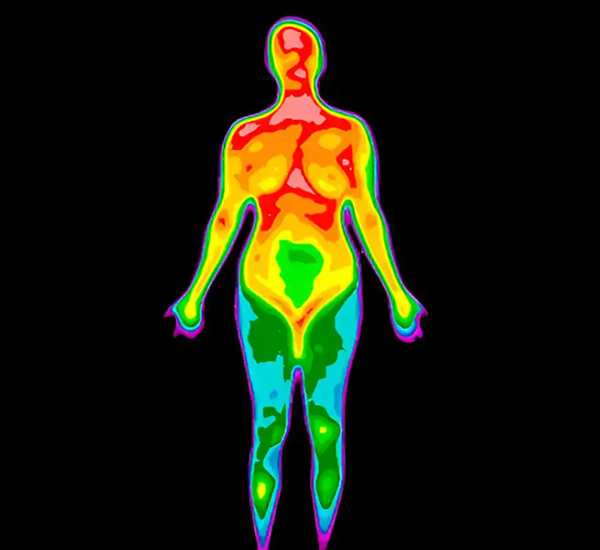
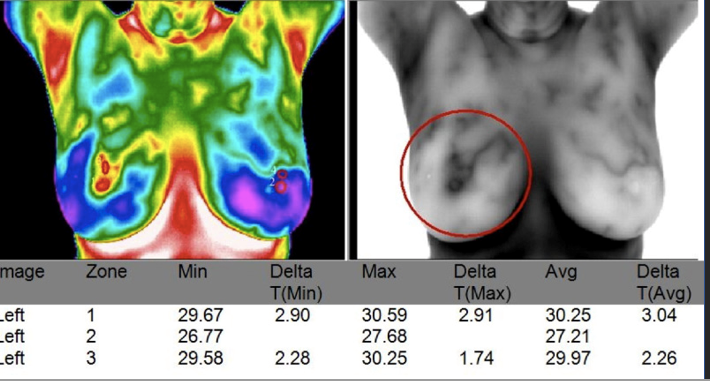
Thermography is a type of physiological imaging that uses an infrared camera to measure heat patterns on the surface of your body.
These patterns may reflect:
Breast thermography does not diagnose cancer or show internal structures. Its role is to provide information about thermal patterns that may be monitored over time or discussed with a healthcare provider.
Before choosing between any breast imaging options, you should consider asking:
Asking these kinds of questions can help you make a much more informed decision.
Breast imaging tools serve different purposes.
Mammography looks at structure, thermography looks at function, and medical providers diagnose and guide treatment.
And when you understand the role of each one of these aspects, you can make clearer, more confident decisions about your breast health.
Whether you’re exploring breast thermography, looking for a whole-body approach, or simply want a clearer understanding of your options, Patricia offers a thoughtful place to begin.
Find a clinic near you and take the next step with greater clarity and confidence.
Stay updated on thermography insights and preventative health tips.


Radiation-free, non-invasive thermography for women who want a more informed first step.
This website service, content, and products are for informational purposes only. Patricia Luccardi does not provide medical advice, diagnosis, or treatment.
© Copyright 2026 Patricia Bowden-Luccardi LLC All Rights Reserved | Privacy Policy
Website Developed by eVisionMedia.ca